
Consider everything your AI agent knows about you.
It has read your emails. It has seen your calendar. It knows your financial spreadsheets, your private messages, your medical appointment schedules, your search history, your children's school events, and the contents of every document on your computer. It knows what you are working on, who you are working with, and what you are worried about.
Now ask yourself: where is all of that data being processed?
For millions of AI agent users in 2026, the answer is: on somebody else's server, in somebody else's data center, governed by somebody else's terms of service. Every prompt, every document, every personal detail is transmitted over the internet to a cloud API, processed by a model you do not control, and subject to data retention policies you probably have not read.
This is the tension at the heart of agentic AI. The more useful an agent becomes, the more intimate data it handles. And the more data it handles, the more important it becomes to ask: who controls this data?
The data sovereignty movement is the growing community of users, developers, and organizations who are answering that question definitively: I do.
What Is Data Sovereignty?
Data sovereignty is the principle that individuals and organizations should maintain full control over their own data — where it is stored, how it is processed, and who has access to it. In the context of AI agents, this means:
- Local processing: Your data does not leave your hardware
- No third-party retention: API providers cannot store or train on your data
- Full auditability: You can see exactly what data the agent accesses and where it goes
- Portability: You can move your data and agent configuration between platforms at will
- Sovereignty by default: Privacy is the starting position, not an opt-in feature
This is not a fringe concern. The EU's AI Act, California's data privacy laws, and GDPR all codify aspects of data sovereignty into regulation. But regulation is reactive. The data sovereignty movement is proactive — building the tools and patterns that make sovereignty practical, not just legal.
The Cloud Problem
To be clear: cloud-based AI is not inherently bad. Services like OpenAI, Anthropic, and Google offer powerful models with strong security practices. Most users will never experience a data breach from these providers.
But there are legitimate concerns that go beyond breach risk:
Training Data Contamination
When you send a prompt to a cloud API, what happens to it? Most providers now offer API terms that exclude your data from training. But policies change. Companies get acquired. Terms of service are updated with 30-day notice periods that nobody reads. The history of technology is filled with companies that promised to protect user data and then found reasons to monetize it.
Third-Party Access
Cloud providers are subject to government data requests, subpoenas, and national security orders. If your AI agent's conversation history has passed through a US-based cloud provider, it is potentially accessible to US authorities — regardless of where you live. For journalists, activists, lawyers, medical professionals, and anyone handling sensitive communications, this is a meaningful risk.
Vendor Lock-In
If your agent's memory, configuration, and operational history live on a provider's infrastructure, you are dependent on that provider's continued existence, pricing decisions, and policy choices. If they raise prices by 500%, change their terms, or shut down, your agent and its accumulated knowledge go with them.
The Aggregation Problem
Even if individual API calls are secure, the aggregation of your data across months or years of agent usage creates a detailed profile of your life. A single email is low-risk data. Your entire email history, calendar, financial records, and personal messages — processed together — is a comprehensive dossier. The question is not whether any single piece of data is sensitive. It is whether the aggregate is something you want stored on infrastructure you do not control.
OpenClaw's Architecture: Sovereignty-Compatible by Design
OpenClaw was not designed primarily as a privacy tool. But its architecture is inherently sovereignty-friendly because it runs on your hardware:
- The agent runs locally: OpenClaw itself executes on your machine (or your server, or your Raspberry Pi). All orchestration, memory, file access, and workflow execution happens locally.
- LLM calls are the only external dependency: The only data that leaves your machine is what you send to the LLM API — and even this can be eliminated with local models.
- Memory is local: Your agent's memory, conversation history, and learned preferences are stored in
~/.openclaw/— on your filesystem, under your control. - Skills run locally: ClawHub skills execute on your machine, not in the cloud.
This means sovereignty is a configuration choice, not a migration project. You can start with cloud APIs for convenience and incrementally move toward full local operation as your needs evolve.
The Fully Local Stack
For users who want zero cloud dependency, OpenClaw supports a completely local AI stack:
Local LLM with Ollama
ai:
  provider: ollama
  model: "llama3.3:70b"           # Or any model available through Ollama
  base_url: "http://localhost:11434"
Ollama runs open-source models (Llama 3.3, Mistral, Qwen, DeepSeek) entirely on your hardware. No data leaves your machine. Performance depends on your GPU — a modern machine with 24GB+ VRAM can run 70B parameter models at reasonable speeds.
Local Speech Processing
voice:
  stt:
    provider: "whisper-local"
    model: "medium"
  tts:
    provider: "piper-local"
    voice: "en_US-amy-medium"
Local Embeddings for Memory
memory:
  embedding_provider: "local"
  model: "nomic-embed-text"       # Runs through Ollama
Local Image Generation
image:
  provider: "stable-diffusion-local"
  model: "sdxl"
  device: "cuda"
With this configuration, your entire AI agent stack — language model, speech recognition, speech synthesis, memory embeddings, and image generation — runs on your hardware. The only network traffic is whatever your agent explicitly generates (web browsing, messaging platforms, etc.).
The Hybrid Approach
Full local operation requires significant hardware investment ($2,000+ for a capable GPU setup). For most users, a hybrid approach provides the best balance of privacy and capability:
ai:
  provider: anthropic
  model: claude-3-5-sonnet

  # Zero-retention API configuration
  api_options:
    zero_retention: true           # Request no data retention

  # Sensitive data filtering
  privacy:
    redact_before_sending:
      - social_security_numbers
      - credit_card_numbers
      - passwords
      - personal_addresses
    sensitive_files:
      - "~/finances/*"
      - "~/medical/*"
      - "~/legal/*"
    sensitive_file_policy: "local_only"   # Never send to cloud API
This setup uses cloud APIs for general tasks but prevents sensitive data from ever leaving your machine. Documents in your finances, medical, and legal folders are processed using local context only — if you ask about them, OpenClaw summarizes locally and sends only the summary (not the raw data) to the cloud API.
Who Needs Data Sovereignty?
Journalists and Investigators
Journalists handling leaked documents, whistleblower communications, or investigation materials cannot risk those materials being transmitted to cloud servers. A fully local OpenClaw setup allows them to use AI assistance for research and analysis without compromising source protection.
Healthcare Professionals
Patient data (PHI) is regulated under HIPAA and equivalent laws worldwide. A therapist using an AI agent to manage case notes needs absolute assurance that those notes never reach a cloud provider's servers.
Legal Professionals
Attorney-client privilege requires that client communications remain confidential. A lawyer using OpenClaw to summarize case documents or draft legal research needs a stack that guarantees data stays local.
Financial Advisors
Client financial data, portfolio details, and investment strategies are subject to regulatory data handling requirements. Local processing ensures compliance without sacrificing AI capability.
Anyone Who Values Privacy
You do not need a regulated profession to care about data sovereignty. Your personal emails, family photos, financial records, and private conversations are yours. The choice to keep them on your own hardware is a reasonable one.
The Performance Tradeoff
Let's be honest: local models are not as capable as frontier cloud models. As of March 2026:
| Capability | Cloud (Claude 3.5 Sonnet) | Local (Llama 3.3 70B) |
|---|---|---|
| Complex reasoning | Excellent | Very Good |
| Code generation | Excellent | Good |
| Creative writing | Excellent | Good |
| Speed (tokens/sec) | Very Fast | Moderate* |
| Cost per query | ~$0.01–$0.05 | Free (electricity) |
| Privacy | Depends on provider | Complete |
*Speed depends heavily on your GPU. A 4090 runs 70B models at 25–30 tokens/sec. An M3 Max runs them at 20–25 tokens/sec.
The gap is narrowing rapidly. Open-source models improve with each release. For many practical agent tasks — email management, file organization, scheduling, basic research — local models are already more than adequate.
The Sovereignty Toolkit
If you want to start moving toward data sovereignty, here is a practical progression:
Level 1: Cloud with boundaries. Use cloud APIs but configure privacy filters, zero-retention options, and sensitive file policies. This is where most users should start.
Level 2: Hybrid. Use local models for sensitive tasks (personal files, financial data, medical records) and cloud APIs for general tasks (web research, creative writing, coding). Best balance of privacy and capability.
Level 3: Fully local. Run everything on your hardware. Maximum privacy, requires hardware investment, and accepts some capability tradeoffs. Best for regulated professions and privacy maximalists.
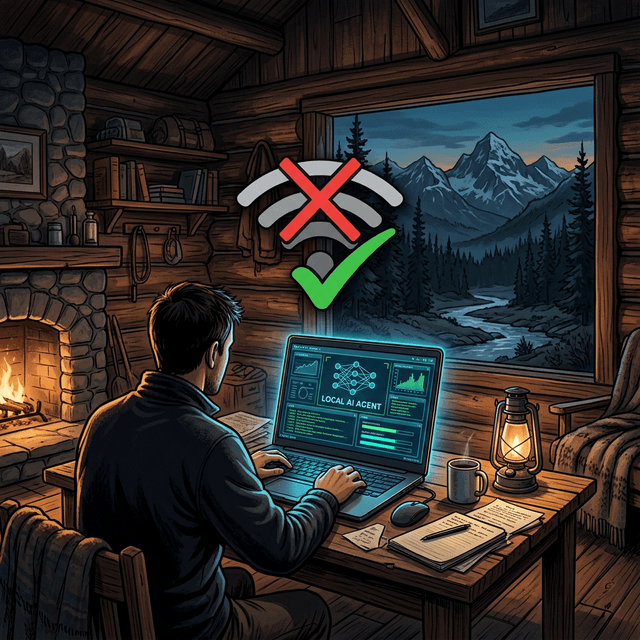
Level 4: Air-gapped. Fully local with no internet connection. The agent operates entirely offline. This is for high-security environments (government, defense, investigative journalism).
Conclusion
The data sovereignty movement is not anti-cloud. It is pro-choice. It is the belief that you should be able to decide where your data lives, who processes it, and what happens to it after processing.
OpenClaw's local-first architecture makes this choice practical. You can run a fully local stack for complete privacy, a hybrid approach for balanced capability, or a cloud-first setup with proper boundaries. The architecture does not force a decision — it enables one.
As AI agents become more deeply integrated into our personal and professional lives, the question of data sovereignty will only grow more important. The time to think about it is not after a breach, a policy change, or a subpoena. It is now.
Your data. Your hardware. Your rules.